Carbon Steel vs Stainless Steel Knives: Honest Comparison
Quick Takeaway
- Carbon: sharper edge, easier to sharpen, more feedback. Rusts if you leave it wet, develops a patina.
- Stainless: corrosion resistant, less maintenance. Better for cooks who don’t want to think about knife care between meals.
- Clad construction: carbon core wrapped in stainless sides. Best of both. The most common format in mid range and premium Japanese knives.
- Powdered steels (SG2, ZDP-189) blur the line: near carbon performance, full corrosion resistance, but harder to sharpen at home.
What Makes Steel “Carbon” or “Stainless”
All steel contains carbon. It’s what makes iron into steel in the first place. So the label “carbon steel” is a bit misleading. What it really means in the knife world is steel without enough chromium to resist corrosion.
The dividing line is chromium content. Steel needs roughly 10.5% chromium to form the invisible oxide layer that prevents rust. Below that threshold, the steel is reactive: it will oxidize, stain, and rust when exposed to moisture and acids. Above it, the steel is considered stainless (though “stain resistant” would be more accurate, since even stainless steel can corrode under certain conditions).
In Japanese knife steels, the split is clear. Shirogami (White Steel) and Aogami (Blue Steel) contain virtually no chromium. VG-10, SG2, and Ginsan contain 13% to 16% chromium. The difference in daily use is significant.
For a deeper look at specific alloys, compositions, and hardness ranges, see Japanese Knife Steel Types Explained.
Edge Performance
This is where carbon steel has traditionally held the advantage, and where the conversation gets nuanced.
Carbon steels like Shirogami #2 (around 1.05% to 1.15% carbon, 60 to 64 HRC) take an exceptionally keen edge. The grain structure is fine and uniform, which means the edge can be refined to a very thin, very sharp apex. Aogami Super adds tungsten, chromium (not enough for stainless status), and vanadium to push hardness to 63 to 67 HRC with better edge retention.
Stainless steels like VG-10 (approximately 1% carbon, 15% chromium, 60 to 61 HRC) are good. They get sharp. But the chromium carbides in the steel create a slightly coarser grain structure, which means the absolute sharpest edge a VG-10 knife can achieve is a step below what Shirogami #2 can reach.
Powdered stainless steels like SG2/R2 (1.25% to 1.45% carbon, 14% to 16% chromium, 63 to 64 HRC) and ZDP-189 (approximately 3% carbon, 20% chromium, 64 to 67 HRC) close this gap substantially. The powder metallurgy process creates a very fine, even carbide distribution that allows these steels to take and hold edges comparable to carbon steels. The trade off is that they’re significantly harder to sharpen at home.
Bottom line: Carbon steel takes the sharpest edge and is the easiest to refine. High end powdered stainless comes close but demands more skill and time on the stones. Standard stainless is a step behind on absolute sharpness but perfectly adequate for the vast majority of cooking tasks.
Sharpening
If you enjoy sharpening, carbon steel is a pleasure. Shirogami in particular gives excellent feedback on whetstones. You can feel the burr forming, feel the steel responding, and get results quickly. A Shirogami #2 knife can go from dull to razor sharp in 10 to 15 minutes with a 1000/6000 grit combination stone.
Stainless steels take longer. VG-10 is reasonable on stones, maybe 15 to 25 minutes for a full sharpening session. The steel is harder to abrade, and the feedback isn’t as clear. You’ll get a good edge, just not as quickly or as intuitively.
SG2 and ZDP-189 are another story. These steels are extremely hard, and removing metal takes real effort. If you sharpen regularly, you’ll learn to work with them. If you sharpen reluctantly, these steels will test your patience. Many SG2 and ZDP-189 owners use diamond plates (at least for initial grinding) because traditional whetstones alone can be slow going.
For a full guide to sharpening technique and stone selection, see Japanese Knife Care and Sharpening: The Complete Guide.
Maintenance and Reactivity
This is the real decision point for most people.
Carbon steel knives need attention. After every use, you need to wipe the blade dry. If you’re cutting acidic foods (citrus, tomatoes, onions), you should wipe between cuts. Leave a carbon blade wet on the cutting board for five minutes and you’ll see orange spots. Leave it overnight and you’ll have real rust to deal with.
For longer storage, a thin coat of camellia oil (tsubaki oil) on the blade prevents oxidation. Some cooks oil their knives after every use; others do it weekly. Either way, it’s a habit you need to build.
Stainless steel knives are forgiving. You can rinse them, set them on the drying rack, and not think about it. They won’t rust from normal kitchen use. You shouldn’t put them in the dishwasher (the handle, not the steel, is what suffers), but beyond that, maintenance is minimal.
Carbon steel develops a patina. Over time, a carbon blade will darken unevenly as it reacts with food acids. This isn’t damage. The patina is a layer of stable iron oxide that forms a partial barrier against further corrosion. Many cooks prize their knife’s patina because it tells the story of what they’ve cooked. Some force a patina intentionally using mustard or vinegar to speed up the process and create patterns.
The patina doesn’t affect food safety or flavor in any meaningful way. It just means your knife won’t look the same six months from now as it did on day one.
The Clad Solution
Most mid range and premium Japanese knives aren’t made from a single type of steel. They use a clad (laminated) construction: a hard carbon or semi stainless core steel sandwiched between softer stainless cladding on the sides.
This is the best of both worlds for many cooks. The cutting edge is carbon steel (or high hardness semi stainless like SKD), giving you the sharpness and edge retention benefits. The exposed flat of the blade is stainless, so the parts most likely to contact food moisture resist staining and corrosion.
The Masakage Yuki line is a good example: Shirogami #2 core with stainless cladding. You get the Shirogami edge quality and sharpening ease, but the reactive area is limited to a thin strip along the cutting edge. The Yoshikane SKD Gyuto takes a different approach with a semi stainless core (roughly 7% chromium, not enough to qualify as stainless but more resistant than pure carbon) in a stainless clad package.
Even some stainless knives use cladding. Tojiro DP knives have a VG-10 core with softer stainless outer layers. Here the purpose is different: the soft cladding is easier to thin and maintain, while the harder core holds the edge.
Comparison at a Glance
| Carbon Steel | Stainless Steel | Powdered Stainless | |
|---|---|---|---|
| Sharpness potential | Excellent | Good | Very good |
| Edge retention | Good to very good | Good | Very good to excellent |
| Ease of sharpening | Easy | Moderate | Difficult |
| Corrosion resistance | None | High | High |
| Toughness | Moderate | Moderate to high | Lower (more brittle) |
| Patina | Yes | No | No |
| Typical HRC | 60 to 67 | 58 to 62 | 63 to 67 |
| Common steels | Shirogami, Aogami | VG-10, AUS-8, Ginsan | SG2/R2, ZDP-189 |
Who Should Choose Carbon
Carbon steel is the right call if:
- You sharpen your own knives and enjoy the process. Carbon rewards time on the stones.
- You work clean. Wiping the blade between cuts is already part of your routine.
- You want the absolute sharpest edge possible for precision work like sashimi or fine vegetable cuts.
- You appreciate the character a knife develops over time. Patina, discoloration, and the marks of use all add personality.
Carbon picks from the catalog:
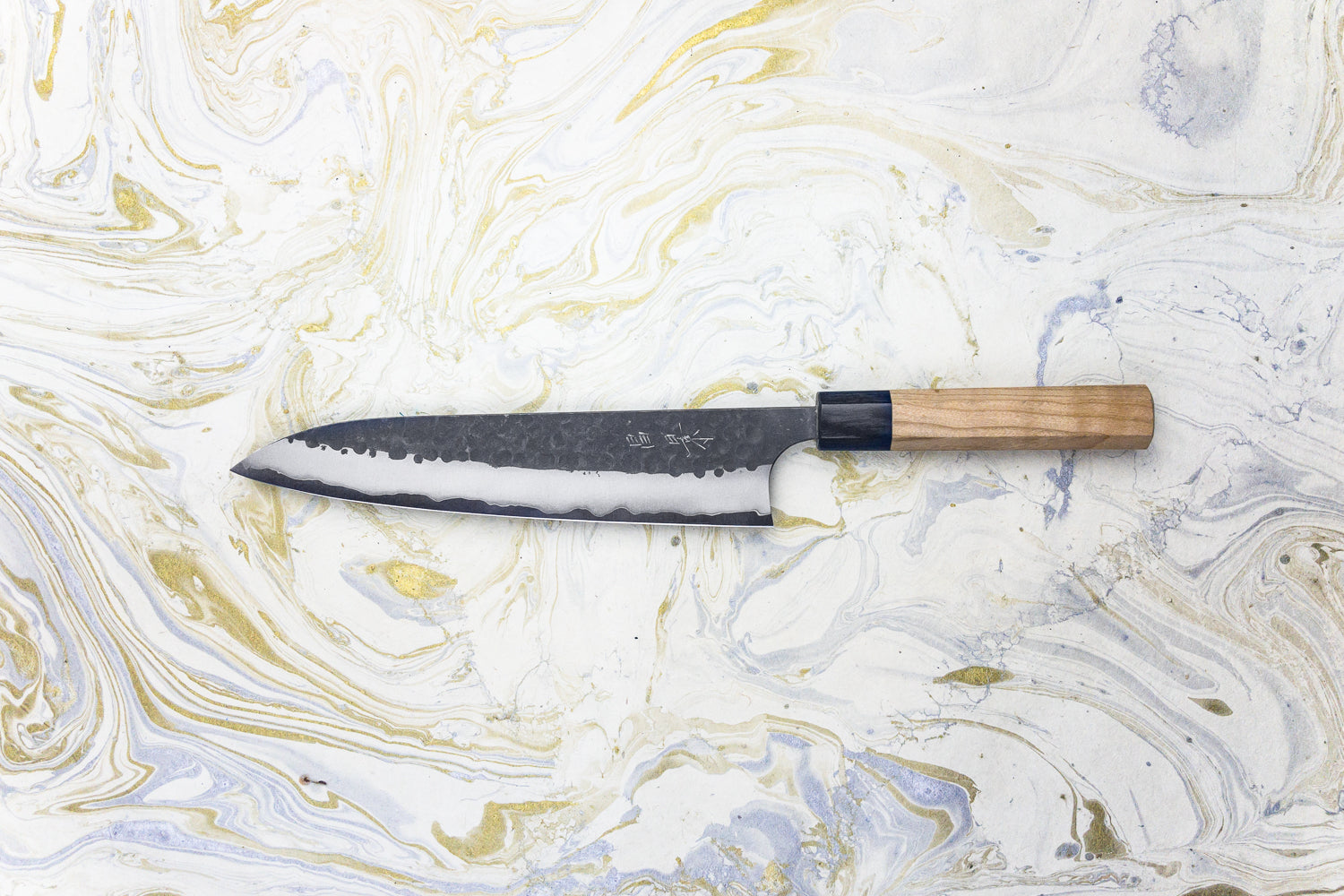
Masakage
Masakage Koishi Gyuto 210mm
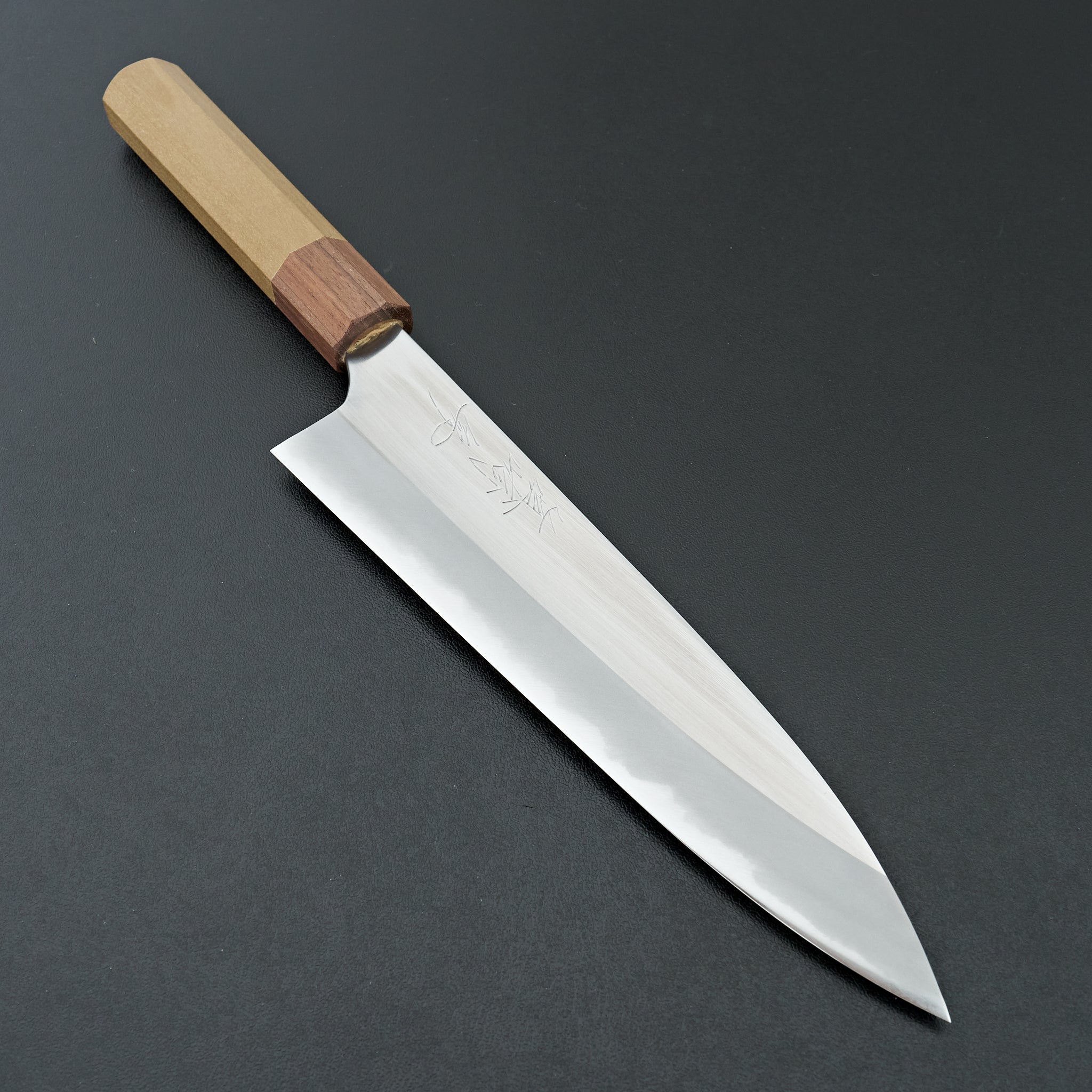
Mazaki
Mazaki Kasumi Gyuto 210mm

Masakage
Masakage Yuki Gyuto 210mm
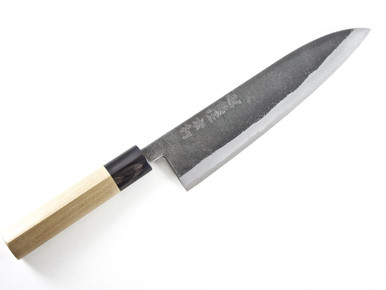
Munetoshi
Munetoshi Kurouchi Gyuto 210mm
The Masakage Koishi Gyuto 210mm uses Aogami Super for serious edge retention. The Mazaki Kasumi Gyuto 210mm and Masakage Yuki Gyuto 210mm both use Shirogami #2 for cooks who prioritize sharpening ease and a keen edge. The Munetoshi Kurouchi Gyuto 210mm, also in Aogami Super, is a workhorse with a rustic kurouchi finish.
Who Should Choose Stainless
Stainless steel is the right call if:
- You don’t want to think about your knife between uses. Rinse, dry, done.
- You cook in a busy environment where you can’t always wipe the blade immediately.
- You’re new to Japanese knives and want to focus on technique before adding maintenance habits.
- You cut a lot of acidic ingredients and don’t want to babysit the blade.
Stainless picks from the catalog:
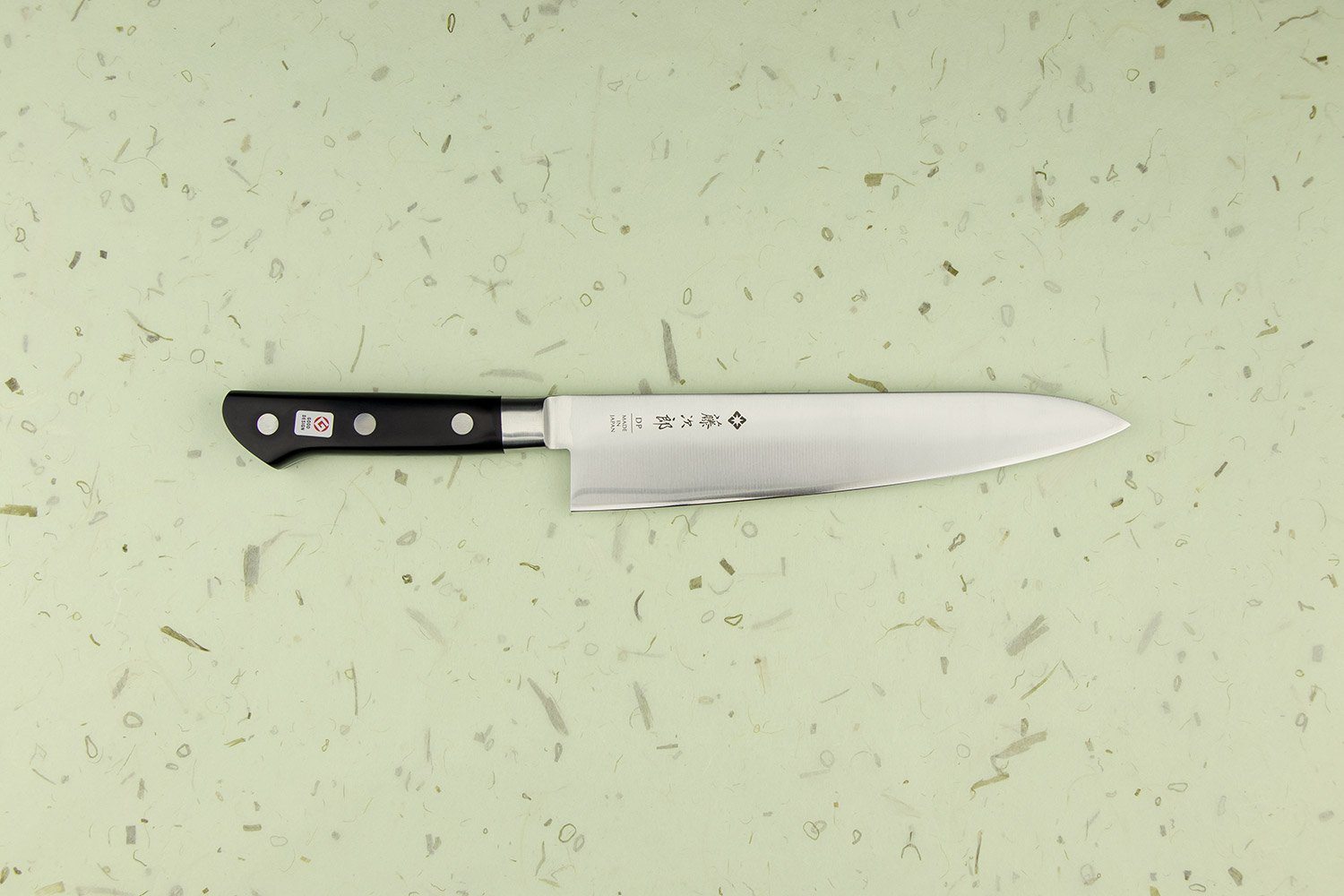
Tojiro
Tojiro DP Gyuto 210mm
Takamura
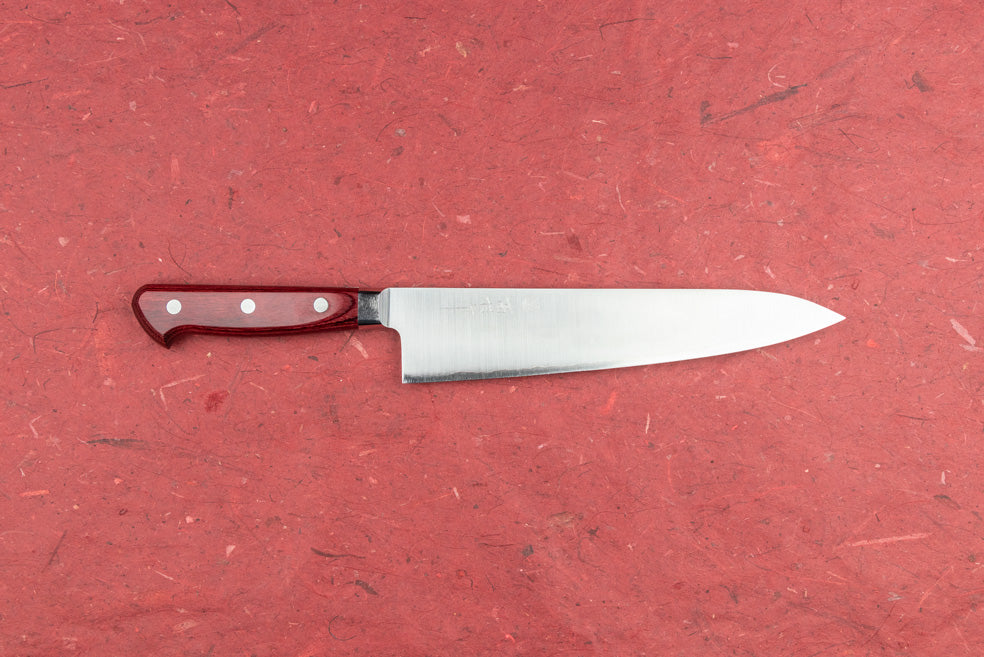
Takamura R2 Gyuto 210mm
Shun
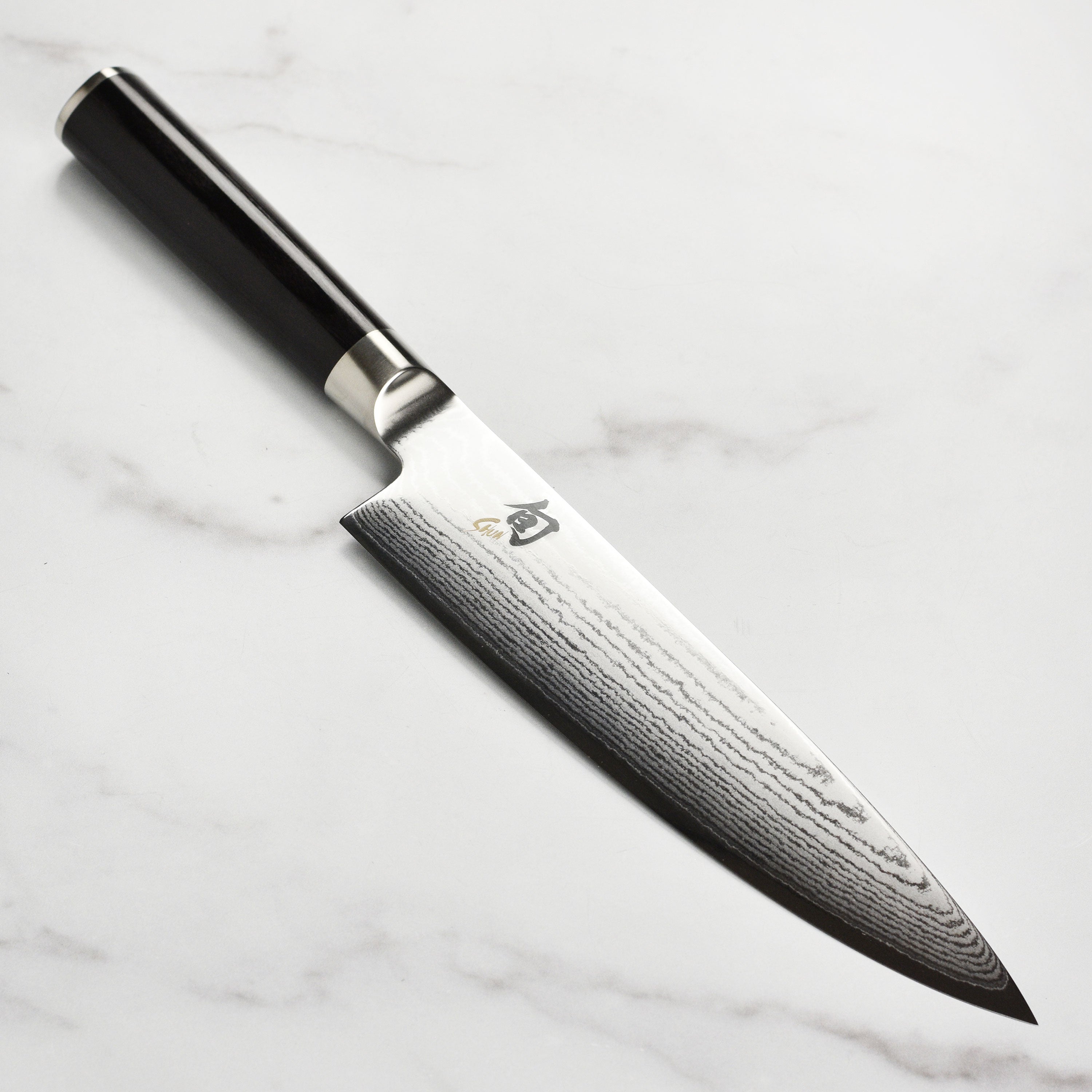
Shun Classic Gyuto 200mm

Global
Global G-2 Gyuto 200mm
The Tojiro DP Gyuto 210mm in VG-10 is one of the best entry level options. The Takamura R2 Gyuto 210mm in SG2 is for cooks who want powdered stainless performance in a thin, laser like grind. The Shun Classic Gyuto 200mm and Global G-2 Gyuto 200mm are both solid, widely available stainless options.
The Middle Ground
If you’re torn, consider one of these approaches:
Start stainless, add carbon later. Buy a stainless gyuto as your daily driver. Once you’re comfortable sharpening and caring for a Japanese knife, pick up a carbon petty or nakiri as a second knife. You’ll quickly learn whether the extra maintenance is worth it for you.
Go clad. A knife with a carbon core and stainless cladding gives you most of the carbon edge quality with less maintenance surface area. The Masakage Yuki Gyuto 210mm and Yoshikane SKD Gyuto 210mm are both excellent clad options.
Try Ginsan. Ginsan (Silver #3) is a stainless steel made by Proterial (the same company that makes Shirogami and Aogami) that sharpens closer to carbon than any other stainless. It has full corrosion resistance but a sharpening feel that carbon steel fans appreciate. The Tanaka Ginsan Gyuto 210mm and Ashi Ginga Gyuto 210mm are both worth a look.
For more context on how these steels, handles, and construction methods all come together, see What Makes Japanese Knives Special. If you’re narrowing down a specific knife to buy, Your First Japanese Knife walks through the decision step by step.