Best Nakiri Knives: Top Picks for Vegetable Lovers
Quick Takeaway
- Budget: Tojiro DP Nakiri 165mm, VG-10 steel. Mid range: Tanaka Ginsan Nakiri 165mm, stainless with carbon sharpness.
- Carbon steel: Masakage Yuki Nakiri 165mm. Premium: Yu Kurosaki Senko SG2 Nakiri 165mm, powdered steel from one of Japan’s top young blacksmiths.
- A nakiri is not your first knife. Get a gyuto or santoku first. Add a nakiri when you realize how much time you spend chopping vegetables.
Why a Nakiri?
If you cook a lot of vegetables, a nakiri changes how you work.
The flat edge makes full contact with the cutting board across the entire length of the blade. No rocking, no curved belly to work around. You push straight down, and the knife does the rest. Onions come out in even, uniform slices. Cabbage shreds cleanly instead of tearing. Herbs get minced without bruising.
That flat profile also means your blade length stays consistent over time. Unlike a gyuto or santoku, where repeated sharpening gradually shortens the curved belly, a nakiri’s straight edge loses almost no usable length as it wears.
The typical nakiri is 165mm, with a tall blade (usually around 50mm or more) that gives you knuckle clearance and a good guide surface for your off hand. They weigh less than they look. That rectangular shape suggests heft, but most nakiris are thin and light, built for speed and precision rather than force.
You don’t need a nakiri if you’re happy using your gyuto for vegetables. But if you cook Japanese, Korean, or Chinese dishes regularly, or if your prep sessions involve a lot of vegetable work, a dedicated nakiri makes the whole process faster and more enjoyable.
What Makes a Good Nakiri
Flat edge geometry. This is the entire point. The edge should sit flush against a flat cutting board with zero gaps. Any belly or curve defeats the purpose.
Thin blade. A nakiri should glide through vegetables, not push them apart. Look for a blade that’s thin behind the edge and tapers smoothly. Thick, wedgy grinds make carrots and potatoes crack instead of slicing cleanly.
Comfortable height. The tall rectangular blade gives your knuckles room. Blade height typically ranges from 45mm to 55mm. Taller is generally better for nakiri work.
Appropriate steel for your lifestyle. Carbon steel gets sharper and feels more responsive on the board, but it needs wiping down after each use and will develop a patina (or worse, rust) if you forget. Stainless steel is more forgiving. Powdered steels like SG2 split the difference: high hardness with good corrosion resistance. Pick the steel that matches your maintenance habits, not the one with the highest Rockwell number. Our carbon vs stainless comparison covers this tradeoff in detail.
Handle you can grip for extended sessions. Nakiris are workhorses. You’ll hold one for long stretches of prep. A wa (Japanese) handle tends to be lighter and sits forward in the hand. A yo (Western) handle offers more counterbalance. Neither is objectively better. Pick whichever feels natural.
Our Picks
Best Budget Nakiri: Tojiro DP Nakiri 165mm

Tojiro
Tojiro DP Nakiri 165mm
Tojiro’s DP line has been a reliable entry point into Japanese knives for years. The nakiri version uses VG-10 stainless steel in a three layer clad construction (VG-10 core with softer stainless cladding), runs at around 60 HRC, and comes with a Western (yo) handle.
What’s good: VG-10 takes a sharp edge and holds it reasonably well. The three layer construction gives you the hardness of VG-10 at the edge while keeping the blade body slightly more flexible. Maintenance is straightforward: hand wash, dry, done. The grind is thin enough for clean vegetable cuts, and the flat edge geometry is correct. Made in Tsubame Sanjo, a production hub with deep metalworking history.
What’s not: The yo handle is functional but basic. Fit and finish won’t win awards. You might notice slight unevenness in the edge out of the box, so a few passes on a whetstone before first use helps. The blade is a touch heavier than some mid range nakiris with wa handles.
Who it’s for: First time nakiri buyers, anyone who wants low maintenance stainless steel, and cooks who prefer a Western grip. If you already own a Tojiro DP gyuto or santoku and like it, this is the natural next step.
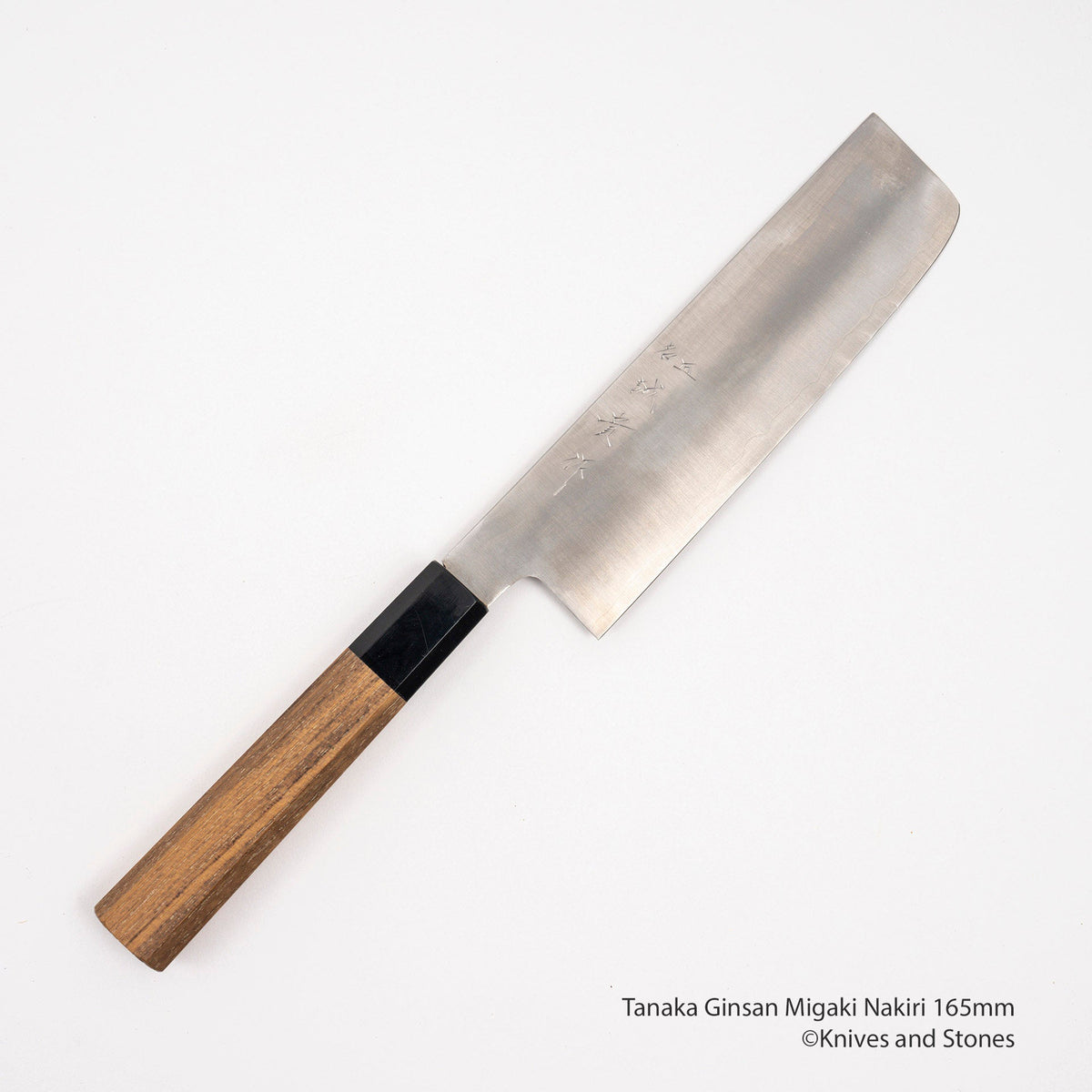
Best Stainless Nakiri: Tanaka Ginsan Nakiri 165mm
Sakai Takayuki
Tanaka Ginsan Nakiri 165mm
Yoshikazu Tanaka forges these in Echizen using Ginsan (Silver #3) steel, a stainless steel made by Proterial (formerly Hitachi Metals) at their Yasugi works in Shimane Prefecture. Ginsan is notable because it sharpens more like carbon steel than typical stainless, reaching a keen edge with less effort on a whetstone.
What’s good: Ginsan is the closest you can get to carbon steel performance without the reactivity. It takes a sharp edge, responds well to whetstones, and won’t rust if you leave it slightly damp (though you still shouldn’t). The nashiji (pear skin) finish on the blade reduces food sticking and looks understated. The wa handle keeps the weight forward and the knife nimble. The grind is thin and clean.
What’s not: Ginsan doesn’t hold an edge quite as long as carbon steels like Shirogami or Aogami, so you’ll touch up on a whetstone a bit more frequently. The nashiji finish can accumulate patina over time, though this is cosmetic. Availability can be inconsistent at smaller retailers.
Who it’s for: Cooks who want the sharpening ease and feel of carbon steel without the maintenance. Vegetarians and plant forward cooks who don’t want to worry about reactive steel discoloring acidic produce. Anyone stepping up from a budget stainless knife who wants to feel the difference without changing their care routine.
Best Carbon Steel Nakiri: Masakage Yuki Nakiri 165mm

Masakage
Masakage Yuki Nakiri 165mm
The Yuki line from Masakage uses Shirogami #2 (White Carbon Steel #2), one of the purest and most traditional blade steels in Japanese knifemaking. Made in Echizen with a nashiji (pear skin) finish over a stainless clad body.
What’s good: Shirogami #2 is prized by sharpening enthusiasts for a reason: it takes an extremely keen edge and responds to whetstones like nothing else. The feedback you get when cutting is precise and immediate. The nashiji finish reduces food sticking and the stainless cladding means only the exposed edge is reactive, so maintenance is manageable even for carbon steel newcomers. Light, well balanced, and comfortable for long prep sessions.
What’s not: The exposed carbon edge will react to acidic ingredients. Citrus, tomatoes, and onions will accelerate patina formation. You need to wipe the blade during use if you’re cutting through these ingredients. Shirogami #2 is softer than Aogami steels, so you’ll sharpen more often (though sharpening is fast and easy).
Who it’s for: Home cooks who enjoy the ritual of caring for their tools. Anyone curious about carbon steel who wants a forgiving starting point (the stainless cladding reduces the maintenance burden compared to a fully reactive blade). Cooks who value an exceptionally keen edge over long edge retention.
Best Premium Nakiri: Yu Kurosaki Senko SG2 Nakiri 165mm

Yu Kurosaki
Yu Kurosaki Senko SG2 Nakiri 165mm
Yu Kurosaki is a blacksmith based in Takefu (part of the Echizen knife region in Fukui Prefecture) who has earned a reputation for combining traditional techniques with modern steels. The Senko line uses SG2 (also marketed as R2), a powdered high speed steel that hits around 63 to 64 HRC while maintaining good corrosion resistance.
What’s good: SG2 is hard, holds an edge for a long time, and resists corrosion thanks to its high chromium content (14 to 16%). The tsuchime (hammered) finish isn’t decorative filler: it reduces friction and food sticking, which matters when you’re pushing through dense root vegetables. The grind is excellent. Thin, even, and cuts with almost no resistance. The wa handle is well fitted. Every detail feels intentional.
What’s not: SG2 is harder to sharpen than Shirogami or VG-10. You’ll need a good quality whetstone and patience when it’s time for a touch up (though you won’t need to sharpen as often). Premium pricing puts this out of reach for casual buyers. At 63+ HRC, the edge is more chip prone if you twist or torque the blade, so proper cutting technique matters.
Who it’s for: Experienced cooks who want the best performance from a nakiri without the maintenance demands of carbon steel. Collectors and enthusiasts who appreciate the craft. Anyone who has owned cheaper nakiris and wants to understand what the premium tier feels like.
Worth Mentioning
A few nakiris that didn’t make our main picks but deserve a look depending on your priorities:

MAC
MAC Japanese Series Nakiri 165mm
MAC Japanese Series Nakiri 165mm is a solid stainless option with MAC’s characteristically thin grind and light weight. MAC has been making knives in Seki since 1964, and their nakiris are popular with professional cooks who want something low maintenance and reliable. If you prefer yo handles and want something between the Tojiro and the Tanaka in terms of refinement, this is worth considering.

Yoshikane
Yoshikane SKD Nashiji Nakiri 165mm
Yoshikane SKD Nakiri 165mm uses SKD semi stainless tool steel, which sits between carbon and stainless in both performance and maintenance. Around 7% chromium means it resists corrosion better than carbon steel but won’t be as carefree as full stainless. Yoshikane is a well respected workshop in Sanjo, and their grinds are consistently thin. A good pick for someone who wants a wa handle nakiri with middle ground steel.

Shun
Shun Classic Nakiri 165mm
Shun Classic Nakiri 165mm uses VG-MAX (KAI Group’s proprietary steel, based on VG-10 with slightly higher carbon) in a damascus clad construction. Shun knives are widely available, which makes handling them before buying easier than most Japanese knives. The fit and finish is clean. The premium on price is partly for the damascus look, which doesn’t affect cutting performance.
Nakiri vs. Usuba: What’s the Difference?
You’ll sometimes see the usuba mentioned alongside the nakiri. They look similar (both are rectangular vegetable knives) but they’re fundamentally different tools.
The nakiri is double bevel, meaning both sides of the blade are sharpened. This makes it symmetrical, intuitive, and suitable for any home cook regardless of experience level.
The usuba is single bevel: sharpened on one side with a flat (or slightly concave) back. This design enables advanced techniques like katsuramuki (peeling daikon into continuous, paper thin sheets) that a double bevel blade can’t replicate. But single bevel knives require more skill to use and significantly more skill to sharpen. They’re professional tools.
If you’re reading a buyer’s guide for nakiris, you want the nakiri. The usuba is for chefs training in traditional Japanese cuisine who specifically need single bevel vegetable work. For a deeper look at both, see our knife types guide.
How to Choose
Start with your maintenance tolerance. If you want to wash, dry, and forget, go stainless (Tojiro DP or Tanaka Ginsan). If you’re willing to wipe the blade between cuts and dry it promptly, carbon steel (Masakage Yuki) rewards you with a sharper, more responsive edge. If you want high performance without the reactivity, powdered steel (Yu Kurosaki Senko) is the answer.
Handle preference matters for nakiris. You’ll hold this knife for long vegetable prep sessions. A wa handle is lighter and shifts the balance toward the blade, which many cooks prefer for the tap chopping motion that nakiris excel at. A yo handle offers more grip and counterbalance. Try both if you can. Our handle comparison guide goes deeper.
Don’t overthink size. 165mm is the standard nakiri length and works for almost everyone. Some makers offer 180mm versions, which give you more blade surface but add weight. Unless you regularly prep for large groups, 165mm is the right call.
A nakiri is a second knife, not a first. If you don’t own a good gyuto or santoku yet, start there. A nakiri is a specialist that excels at one thing. Your first knife should be a generalist. See our beginner’s guide or our gyuto vs chef’s knife comparison for where to start.
Steel Quick Reference
| Steel | Type | Maintenance | Edge Retention | Sharpening Ease |
|---|---|---|---|---|
| VG-10 | Stainless | Low | Good | Easy |
| Ginsan (Silver #3) | Stainless | Low | Good | Very easy |
| Shirogami #2 | Carbon | High | Good | Easiest |
| SG2 / R2 | Powdered | Low | Excellent | Moderate |
For a full breakdown of these steels and more, see our steel types guide.
Care Tips for Your Nakiri
Nakiris are thin. That’s what makes them great at cutting vegetables and not great at cutting bones, frozen food, or anything with pits. Use a nakiri for what it’s designed for and it will last for decades.
A few specifics:
- Use a wooden or soft plastic cutting board. Glass, ceramic, and bamboo (which contains silica) will dull the edge quickly.
- Hand wash and dry immediately. Even stainless steel benefits from this habit. Carbon steel demands it.
- Sharpen on a whetstone. A 1000 grit stone is all you need for regular maintenance. Our sharpening guide walks through the process step by step.
- No twisting or prying. The thin blade and hard steel mean lateral force can chip the edge. Push straight down, lift, repeat.
For a complete care routine, see our knife care and sharpening guide.