Best Japanese Petty Knives: The Utility Knife You're Missing
Quick Takeaway
- Top pick: Takamura R2 Petty 130mm in SG2 powdered steel. Laser thin geometry and a screaming edge out of the box. The petty that ruined other petty knives for a lot of people.
- Best value: Tojiro DP Petty 150mm for VG-10 at an entry level price. Solid performer, no surprises.
- Best budget: Fujiwara FKM Petty 120mm in AUS-8. Easy to sharpen, low maintenance, and surprisingly capable for the price.
- Carbon steel pick: Masakage Yuki Petty 130mm in Shirogami #2. Takes the sharpest edge of anything on this list and develops a beautiful patina over time.
- Premium pick: Yu Kurosaki Senko SG2 Petty 130mm if you want artisan craftsmanship with striking tsuchime (hammered) texture.
- Size matters: 120mm to 135mm for board work and detail tasks. 150mm if you want something closer to a small gyuto.
Why You Need a Petty Knife
If you own a gyuto and nothing else, the petty is the obvious next addition. “Petty” comes from the French petit, meaning small. It fills the gap between your main knife and your hands: trimming fat, peeling ginger, coring tomatoes, segmenting citrus, breaking down shallots, slicing garnishes. The tasks where a 210mm blade is overkill but a Western paring knife feels stubby and thick.
Japanese petty knives typically run 120mm to 150mm with thinner geometry and harder steel than their Western counterparts. That means a noticeably sharper edge that holds longer, at the tradeoff of being more delicate. If you’re used to Japanese knives, you already know the deal.
Professional cooks often say their petty sees more use than their main knife. That’s not hyperbole. Once you have a sharp, light petty that you trust for quick tasks, it becomes the path of least resistance. Instead of pulling out your gyuto to slice one lime, you grab the petty. Instead of reaching for a clunky Western utility knife, you grab the petty. It compounds.
Petty Knife vs Paring Knife
They overlap, but they’re not the same thing. A Western paring knife is usually 75mm to 100mm with a thick, sturdy blade designed for in-hand work: peeling an apple toward your thumb, trimming vegetables without a cutting board. A petty knife is longer (120mm to 150mm), thinner, and works equally well on a board and in the hand. Think of it as a small utility knife that can do paring work, not a paring knife that grew a few centimeters.
The 150mm size especially blurs the line with a small gyuto. If you want a true paring knife substitute, stick with 120mm to 135mm. If you want a mini chef’s knife, look at 150mm.
Our Picks
Top Pick: Takamura R2 Petty 130mm
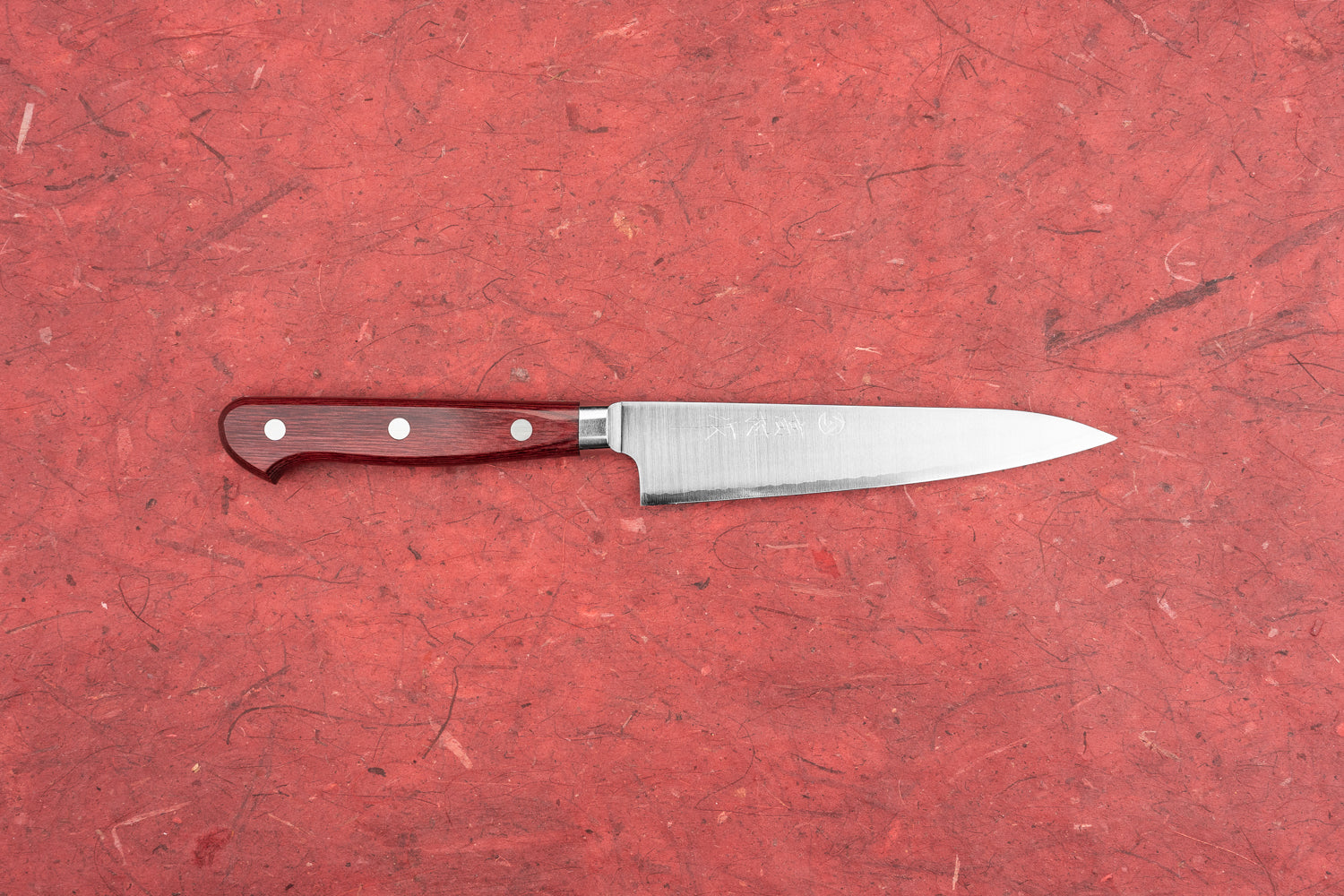
Takamura
Takamura R2 Petty 130mm
Steel: SG2 / R2 (Powdered Steel) Hardness: ~63 HRC Blade Length: 130mm Handle: Yo (Western), pakkawood Finish: Migaki (polished)
The Takamura R2 Petty 130mm comes up in nearly every petty knife discussion online, and it earns the reputation. Takamura in Echizen forges these from SG2 powdered steel at around 63 HRC, which means remarkable edge retention for a stainless knife. The blade geometry is laser thin, so it glides through produce with minimal resistance.
The yo handle is slim and light. Some people find it too thin for extended use, but for petty work (short, precise tasks) it’s comfortable. The migaki finish is easy to clean and doesn’t hold onto food.
The tradeoff: this is a thin knife in hard steel. If you twist the blade sideways under pressure or try to use it for hard root vegetables, you risk chipping. Treat it as the precision tool it is, not a beater, and it will reward you.
Takamura also makes a 150mm version if you prefer the longer format. Both use the same steel and geometry.
Best Value: Tojiro DP Petty 150mm

Tojiro
Tojiro DP Petty 150mm
Steel: VG-10 Hardness: ~60 HRC Blade Length: 150mm Handle: Yo (Western), pakkawood Finish: Migaki (polished)
Tojiro makes the DP series in Tsubame-Sanjo, a metalworking region in Niigata with serious pedigree. The Tojiro DP Petty 150mm uses a three-layer VG-10 core clad in softer stainless, the same construction as their popular gyuto line. At around 60 HRC, it’s hard enough to hold a good edge but forgiving enough that beginners won’t chip it easily.
At 150mm, this sits at the larger end of petty territory. It can handle light prep work that a 130mm knife would struggle with. If you only want one petty knife and you use it for everything from mincing garlic to slicing small vegetables, the longer blade helps.
The handle is functional but nothing special. The blade is where the value is.
Best Budget: Fujiwara FKM Petty 120mm

Fujiwara FKM
Fujiwara FKM Petty 120mm
Steel: AUS-8 Hardness: ~58 HRC Blade Length: 120mm Handle: Yo (Western) Finish: Migaki (polished)
For the tightest budgets, the Fujiwara FKM Petty 120mm from Fujiwara FKM in Seki delivers more than you’d expect. AUS-8 steel at around 58 HRC won’t hold an edge as long as VG-10 or SG2, but it’s easy to sharpen back to scary sharp in a few passes on a whetstone. The carbon vs stainless tradeoff doesn’t apply here since AUS-8 is fully stainless, so maintenance is minimal.
At 120mm, this is a true petty in the traditional size range. Good for detail work, in-hand peeling, and quick board tasks. If you already own a Fujiwara FKM gyuto from following our starter kit guide, this is the natural companion.
Premium Pick: Yu Kurosaki Senko SG2 Petty 130mm

Yu Kurosaki
Yu Kurosaki Senko SG2 Petty 130mm
Steel: SG2 / R2 (Powdered Steel) Hardness: ~63 HRC Blade Length: 130mm Handle: Wa (Japanese), octagonal Finish: Tsuchime (hammered)
Yu Kurosaki is one of the most recognized young blacksmiths working in Echizen today, and the Senko line showcases why. The Yu Kurosaki Senko SG2 Petty 130mm uses the same SG2 core as the Takamura, so performance is in the same league: excellent edge retention, thin grind, and that satisfying ease through ingredients that powdered steel delivers.
What separates it is the wa handle and the tsuchime finish. The hammered texture creates small air pockets between blade and food, which can reduce sticking during cuts. The octagonal handle shifts the balance point toward the blade, giving you more control for fine work.
This is a step up in price from the Takamura, and the cutting performance is similar. You’re paying for the craftsmanship, the handle style, and the visual appeal. If those things matter to you, this is worth it.
Carbon Steel Pick: Masakage Yuki Petty 130mm

Masakage
Masakage Yuki Petty 130mm
Steel: Shirogami #2 (White Carbon Steel #2) Hardness: ~62 HRC Blade Length: 130mm Handle: Wa (Japanese) Finish: Nashiji (pear skin)
The Masakage Yuki Petty 130mm from Masakage in Echizen is for the cook who wants to experience what carbon steel brings to a petty. Shirogami #2 takes a finer edge than any stainless steel on this list and sharpens with almost no effort. The name “Yuki” means snow, a reference to the frosty nashiji finish on the blade.
The tradeoff is maintenance. Shirogami #2 is reactive carbon steel with no chromium, so it will develop a patina from acidic foods and can rust if left wet. You need to wipe it dry after every use. For some cooks, the patina is part of the appeal. For others, it’s a dealbreaker. Be honest with yourself about which camp you’re in before buying carbon.
The wa handle keeps the knife light and blade-forward. At 130mm, it’s sized right for board work and in-hand tasks alike.
Worth Knowing About

Misono
Misono Molybdenum Petty 130mm
Misono Molybdenum Petty 130mm: Misono in Seki makes some of the most trusted professional knives in Japan. Their Molybdenum series uses a proprietary stainless steel that’s easy to maintain and takes a clean edge. Serious Eats named a Misono Molybdenum petty as their top overall pick. If you want a no-fuss professional workhorse, this is it.
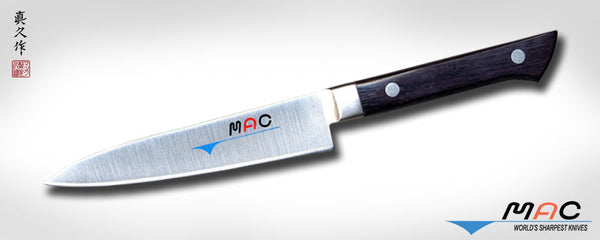
MAC
MAC Professional Petty 135mm
MAC Professional Petty 135mm: MAC has been making knives in Seki since 1964. Their Professional series uses a molybdenum high carbon stainless that sits comfortably in the mid-range for hardness. MAC knives tend to be thinner and lighter than competitors at the same price, which makes them feel faster in the hand.
Shun Classic Paring 100mm: At 100mm, this is really a paring knife rather than a petty, but it’s worth mentioning for anyone specifically looking for a shorter blade. Shun (KAI Group, Seki) uses VG-MAX, their proprietary steel in the VG-10 family, with a 34-layer damascus cladding on each side.
How to Choose Your Petty
Size
The three common lengths serve different purposes:
120mm fits in your hand like a paring knife. Best for peeling, trimming, and detail work where the cutting board is optional.
130mm is the sweet spot for most cooks. Long enough for small board tasks, short enough for in-hand work. Most of our top picks are this length.
150mm overlaps with a very short gyuto. Good if you want a single small knife for light prep, slicing, and mincing. Less practical for in-hand peeling.
Steel Type
Stainless (VG-10, SG2, AUS-8): Low maintenance, no patina, dishwasher safe (though hand washing is always better for the edge). SG2 holds an edge longest. VG-10 is the reliable middle ground. AUS-8 is easiest to sharpen. Read our full steel guide for the details.
Carbon (Shirogami, Aogami): Sharpest edges, easiest to sharpen, but requires active care. Wipe dry after every use, oil if storing long term. Develops a unique patina. Only choose carbon if you’re willing to maintain it.
Handle Style
Yo (Western): Familiar grip, typically heavier, full or partial tang. Most budget and mid-range petty knives use this style.
Wa (Japanese): Lighter, blade-forward balance, traditional octagonal or D-shape. Feels different in a pinch grip. Read our handle comparison if you’re undecided.
What We Left Out (and Why)
Ashi Hamono Ginga Petty 150mm: A genuinely excellent knife with cult following on Reddit. Extremely thin, extremely light, pure performance. We left it out because it’s perpetually hard to find in stock and availability varies wildly by region. If you can find one, it belongs in the conversation with the Takamura.
Shibata Kotetsu R2 Petty: Another high performance R2 petty with a dedicated following. Similar story to the Ginga: limited production runs and inconsistent availability make it hard to recommend as a “go buy this” pick. Worth seeking out if you’re building a collection.
Misono UX10 Petty: Misono’s Swedish stainless line is excellent, but the UX10 petty carries a premium price that pushes it past the mid range without a clear performance advantage over the Takamura R2 in this size category.
Shun Hikari Utility 150mm: Shun’s premium line with a hand-hammered blade and SG2 core. Well made, but at its price point you have better options from smaller Japanese makers.
Our Recommendation
For most cooks, the Takamura R2 Petty 130mm is the one to get. It’s the petty that shows up in every recommendation thread for a reason: the cutting performance is exceptional for its price, the edge retention is remarkable, and at 130mm it handles everything a petty should. If you’re building your first set, pair it with a gyuto and you have a kitchen covered.
If the Takamura is above your budget, the Tojiro DP Petty 150mm gives you a dependable VG-10 petty at entry level pricing with the bonus of a longer blade. And if you want to try carbon steel in a low-risk format, the Masakage Yuki Petty 130mm is an excellent entry point. A petty knife gets less exposure to water and acids than your main knife, which makes it a forgiving way to learn carbon steel habits.
Whatever you choose, the petty will quickly become one of the most used knives in your kitchen. It’s the knife you reach for ten times a day without thinking about it.